How to Use the Yamazaki Multi Eco Stand: 8 Ideas, Including How Japan Uses It
Disclosure: This post contains affiliate links. If you buy through them, I may earn a small commission at no extra cost to you. It doesn’t change which products I include or what I say about them.
The Yamazaki Multi Eco Stand looks like a strange little object: four steel arms on a small base. In the US it’s sold mainly as a bottle dryer, and it’s good at that. But in Japan, where Yamazaki is based, stands like this are sold for a different first job, and once you know it, you start seeing more uses.
I’m a Japanese writer living in a small apartment near Tokyo. To be upfront: I don’t own this stand. This guide is based on the manufacturer’s listing, buyer reviews and Japanese articles about the product, plus what I know about how kitchens and recycling work in Japan.
If you’re new here, this stand was one of my 7 Yamazaki kitchen picks for small kitchens.
Quick facts
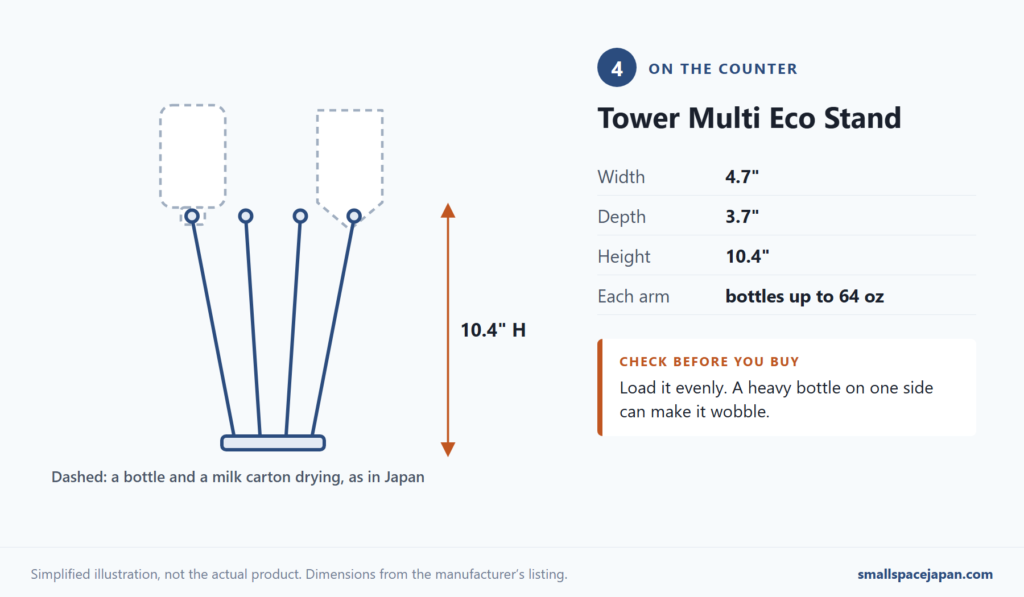
- Size: 4.7″ W × 3.7″ D × 10.4″ H, about 1 lb
- Capacity: four arms, each holding a bottle up to 64 oz, with about 3.75″ between arms when fully open
- Material: steel with three layers of powder coating, plus silicone tips on the top and bottom of the arms to keep things from slipping
- Storage: folds flat to fit in a drawer
- Colors: black or white
- Model number: 6784
- Rating: 4.8★ from about 11,400 ratings
How it’s used in Japan
In Japan, Yamazaki sells stands like this one as a “plastic bag eco holder.” The name says what it’s for: you hook a plastic bag on the arms, and it becomes a small trash bin. Japanese articles about the product suggest putting one by the sink for vegetable scraps while you cook, or on a table or desk as a mini trash bin.
The other big use is drying things before they’re recycled. Recycling in Japan asks a little more of you than in most US cities. Milk cartons are a good example. Where I live, in Kasukabe, a city just north of Tokyo, you rinse your cartons and dry them before putting them out. The city collects them about once a week from the neighborhood garbage collection point, or you can take them to the recycling boxes that many supermarkets have. A wet carton isn’t something you want sitting on the counter, so a stand that holds it upside down to dry is useful. Japanese articles about the product mention drying rinsed bottles, milk cartons and glasses.
Keep that in mind as you read the ideas below. This stand was designed for a kitchen where small, wet, awkward things need somewhere to go.
8 ways to use it
1. Dry reusable water bottles
This is the most common reason people buy it. Each arm takes a bottle up to 64 oz, and because the arms are tall, the bottle hangs straight down and drains properly. On a regular dish rack, tall bottles tend to lean on short pegs and stay wet inside.
2. Dry baby bottles
The manufacturer lists baby bottles as one of its uses. The arms hold the bottles; nipples, rings and other small parts will need somewhere else to dry.
3. Dry tall glasses and jars
Tall glasses, mason jars and travel mugs are awkward in most dish racks. On the stand they sit upside down on an arm, so the water runs out instead of pooling at the bottom.
4. Dry reusable zip-top bags
If you wash and reuse zip-top or silicone bags, you know how hard they are to dry. Pull a bag over one arm, open side down, and air can get inside. The listing also mentions drying shopping bags.
5. Hold a bag open while you fill it
Some buyers use it this way, and the manufacturer suggests it too. Hang a zip-top bag on the arms and it stays open by itself, so you can spoon in leftovers, soup or marinade with both hands free.
6. Collect food scraps while you cook
The manufacturer suggests lining the stand with a compostable bag to collect food scraps. This is close to the Japanese “plastic bag eco holder” idea: a small bin right where you’re chopping, instead of walking to the trash can again and again. When you’re done, lift out the bag and fold the stand away.
7. Dry milk cartons for recycling, the Japanese way
If your city’s recycling program takes cartons, rinsing them and letting them drip dry upside down keeps the recycling bin from getting sticky and smelly. Recycling rules differ from city to city, so check what yours asks for. In Japan, rinsing and drying is simply part of the routine.
8. A tiny trash bin on a desk or table
Because it folds flat and only needs a plastic bag, the stand works as a small trash bin outside the kitchen too. Japanese articles suggest using it on a table or desk, for example to collect peels and wrappers during a meal or snack.
Good to know before you buy
- Load it evenly. If one side is much heavier than the other, it can wobble. Be careful with heavy glass, and put the heaviest items on opposite arms.
- It doesn’t catch water. Put it on a tray, a mat or the edge of the sink.
- Check the size. At 10.4″ tall, it fits under most upper cabinets, but compare the 3.75″ gap between arms with the bottles and glasses you plan to dry.
- Buyers are very happy overall. As of October 2026, only about 1% of ratings on Amazon are 1 or 2 stars.
Is it worth it?
If your dish rack is always full of bottles and jars, yes. It does one job very well, takes up little counter space, and folds flat into a drawer when you’re not using it. And if you try the bag tricks (ideas 5, 6 and 8), you may end up using it more as a bag holder than a bottle dryer, which is how it’s sold in Japan.
Star ratings and rating counts are from the Amazon.com product page as of October 2026 and may have changed. Counts include ratings from other Amazon stores. Product details are from the manufacturer’s listing.
Sources:
- Yamazaki Home, Multi Eco Stand product listing on Amazon.com (model 6784)
- ITmedia Nlab Research, article on Yamazaki’s plastic bag eco holder (October 5, 2025, in Japanese)
- All About News, article on Yamazaki’s Tower plastic bag eco holder (September 18, 2026, in Japanese)